The Tools Revolutionizing How We Populate Virtual Worlds
In the ever-evolving landscape of game development, artificial intelligence is opening up transformative avenues, particularly around the concept of avatars. As players invest more time — and emotional energy — in their virtual identities, the demand for personalization, continuity, and ownership in virtual spaces continues to grow. Companies like Ready Player Me are at the forefront of this movement, pushing forward a vision where avatars are not just characters, but extensions of ourselves, freed from the technical limitations that once constrained their design and integration.
Drawing from my own experience and insights from a recent discussion with Rainer Selvet, co-founder of Ready Player Me, I want to explore how AI is helping game developers focus less on technical burdens and more on creating authentic, immersive experiences. This article delves into the future of avatars, discussing customization, interoperability, identity, and the role of AI-driven technologies that will shape this evolution.
Beyond Avatars: A New Paradigm for Character Creation
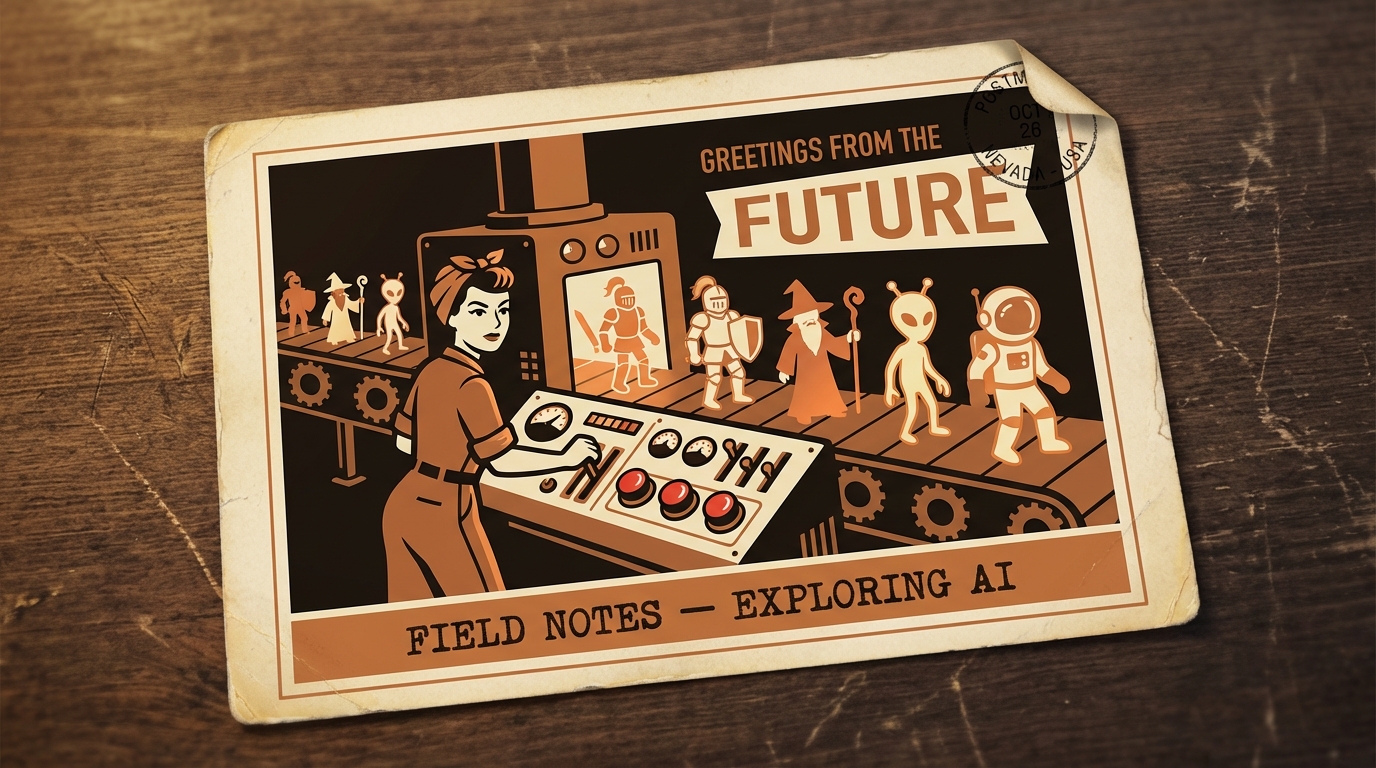
While much of the focus around avatars centers on player customization, Ready Player Me’s technology extends far beyond this single use case. Their tools are revolutionizing character creation as a whole, making it possible to populate virtual worlds with diverse, dynamic characters at an unprecedented scale. Imagine a scenario where a game developer can generate an entire cast of characters — from detectives to witnesses in a crime scene — almost instantaneously. Each character can be customized to fit the narrative and aesthetic needs of the game, without requiring weeks of manual labor.
This capability is transformative. Tools like Ready Player Me and others, such as MetaHuman, empower developers to bypass traditional bottlenecks in character production. Instead of painstakingly sculpting each model, developers can focus on the creative intent: what roles these characters play, how they fit into the story, and how they interact with players. This shift dramatically reduces production timelines and costs, while still delivering visually compelling and narratively coherent characters.
This approach also democratizes character creation. Smaller studios, which may not have access to large art teams, can now create rich, populated worlds with a high degree of visual fidelity. It levels the playing field, enabling creative teams to invest their time and resources into crafting engaging player experiences rather than getting bogged down by technical constraints.
The Avatar of Tomorrow: AI-Driven Customization for a Personal Experience
One of the core visions of Ready Player Me is to liberate developers from the time-consuming technical aspects of character design, enabling them to focus on crafting more expressive and engaging experiences for players. Traditionally, developing a character customization system required dedicated teams and significant resources. Ready Player Me’s platform offers a streamlined solution that handles much of this complexity.
Through their system, developers gain access to a comprehensive Content Delivery Network (CDN) that facilitates the rapid delivery of customizable avatars across platforms. AI plays a central role, enabling advanced asset management: clothing items, for instance, can be automatically adjusted to fit avatars of different body types and proportions. This technology doesn’t just enhance visual appeal; it also tackles functional aspects, like adjusting textures and ensuring items look consistent across diverse game styles and settings.
Moreover, Ready Player Me’s platform includes AI-based texture generation, with the future intent of allowing developers to adapt assets to match a game’s unique art direction, minimizing the need for manual adjustments. Whether it’s creating character outfits or adjusting a specific style for a fantasy game, this technology allows artists to bypass repetitive tasks, giving them the freedom to focus on creative decisions.
A Glimpse into the Future of Avatars: Player Identity, Ownership, and Social Connection
While AI-driven customization is making character creation more efficient, the future potential of avatars goes beyond aesthetics. Avatars could become central to how players express themselves across virtual spaces, linking social identities and gaming achievements in a way that is as consistent as it is personal. Rainer Selvet’s vision for Ready Player Me isn’t limited to one game or platform; instead, it’s about creating a framework where a player’s virtual identity, achievements, and items carry across various gaming environments.
One concept shaping this vision is asset interoperability. While fully interchangeable avatars across all games might be impractical due to artistic and technical limitations, assets like specific outfits or accessories could be more easily adapted and transferred. For instance, a player might acquire a unique item in one game and have it “translated” stylistically into another, creating a sense of continuity without breaking the immersion of each game’s unique aesthetic. In this vision, players can retain a sense of ownership over certain elements of their avatars, regardless of the game they’re playing.
NFTs and the Concept of Ownership in the Digital Age
Ownership in virtual worlds is a concept that has gained momentum with the rise of NFTs and blockchain technology. The promise of NFTs was to give players verifiable ownership of their digital assets, making them transferrable between games. However, while NFTs created a wave of excitement, they have yet to achieve widespread adoption in gaming due to the technical and economic challenges they pose.
Ready Player Me approaches the idea of ownership more pragmatically. Rather than emphasizing full asset ownership through NFTs, the platform allows players to customize and retain elements of their avatars in a way that feels personal and meaningful. This approach respects both the creative integrity of individual games and the players’ desire for continuity, all without the complex infrastructure that NFTs currently require. In the long term, as technology evolves, NFTs might find a place in gaming, but for now, Ready Player Me’s model offers a tangible and accessible way for players to feel a sense of possession over their digital identity.
Looking Forward: Building the Future of Character Systems
As we look to the future, AI-driven platforms like Ready Player Me could redefine not just how avatars are created, but how entire worlds are populated. These tools will enable game developers to rapidly generate diverse, believable characters who enrich the player’s experience. Imagine games where every shopkeeper, guard, or background character is unique, with their own personality and style, all created in a fraction of the time it would traditionally take.
This is more than an efficiency gain; it’s about setting a foundation where creative expression isn’t limited by technical hurdles. Developers will be able to integrate complex character systems quickly, with AI handling everything from asset scaling to style adaptation. The focus shifts from technical execution to creative storytelling.
By 2030, we could see a world where character creation tools are as essential as game engines themselves. Developers will no longer be constrained by the resources available to build individual characters. Instead, they’ll be free to focus on delivering richer, more immersive player experiences, backed by AI-driven systems that handle the heavy lifting. Whether it’s creating the perfect avatar or populating a bustling city, these technologies will continue to push the boundaries of what’s possible in gaming.
Conclusion
In an industry known for pushing the boundaries of technology, characters represent a new frontier for personalization and player connection. AI is not only making characters more flexible and customizable but also empowering developers to populate their worlds with ease. Companies like Ready Player Me are at the center of this shift, developing tools that bring us closer to a world where avatars reflect our personalities and games are filled with vibrant, dynamic characters.
As the gaming world continues to evolve, so too will our understanding of what it means to have a virtual identity. With AI-driven customization, social interoperability, and emerging concepts of digital ownership, avatars and characters are becoming integral parts of who we are in the digital world. This is a future worth building toward, where technology enhances creativity and allows us to focus on the experiences that matter most.