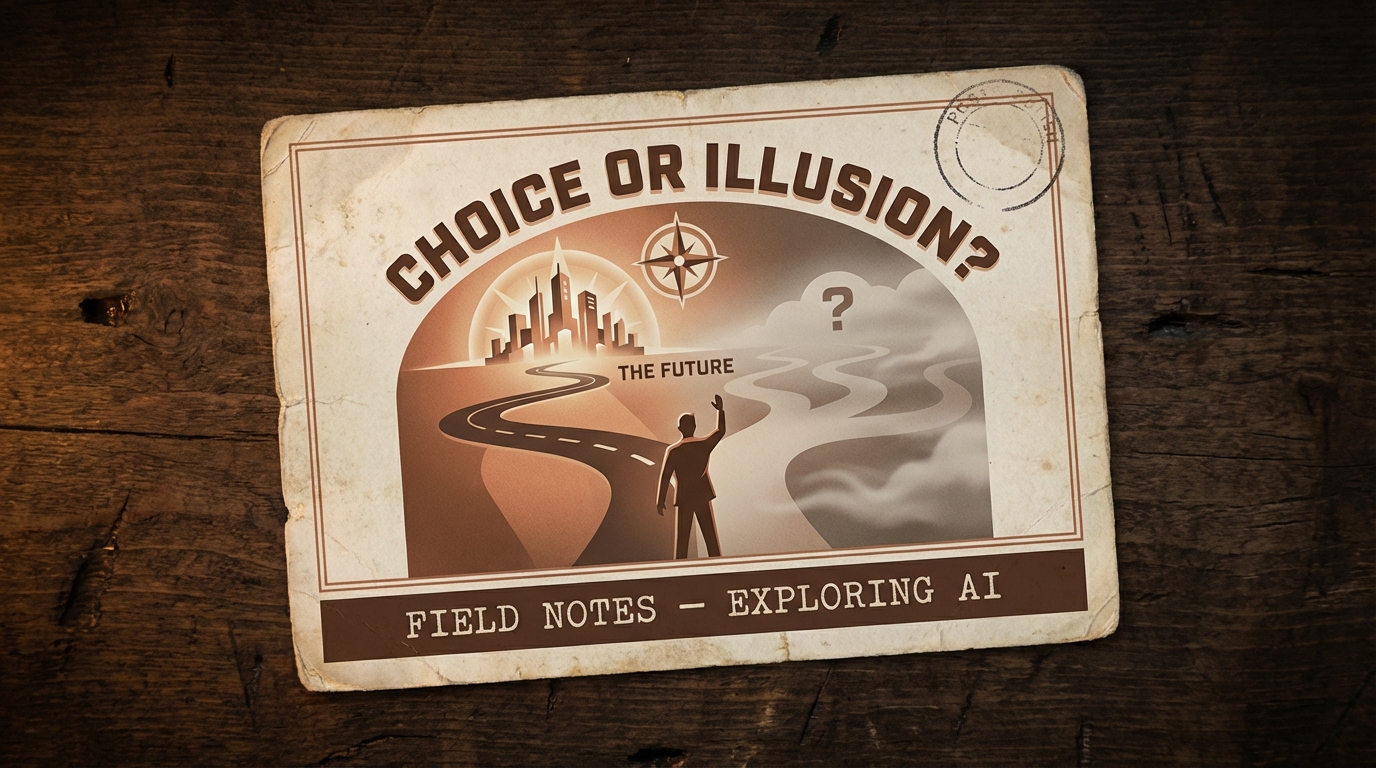
Talking to NPCs? Only 2% of players actually care…
We often hear that AI will revolutionize gaming by making NPCs more dynamic, more reactive, more “alive.” But is this really what players want? Most games thrive on
clear objectives, meaningful choices, and tight gameplay loops
— not endless conversations with virtual characters. Are we chasing a mirage, investing in limitless possibilities when what truly matters is
how choices shape the player experience
?
Reflections from a Hackathon with Mistral
Recently, I had the opportunity to participate in a hackathon with Mistral, exploring the idea of indirect play — a concept where players influence the game world and characters without direct control. This event was particularly interesting because it showcased how Large Language Models (LLMs) could be integrated into game design, expanding the range of possible interactions.
However, after observing different projects, discussing with teams, and reflecting on the potential of these AI-driven experiences, I started to notice a paradox: while LLMs offer a seemingly infinite space of possibilities, the essence of game design is about structuring meaningful choices.
This article aims to explore the fundamental tension between procedural AI-generated possibilities and structured player agency, asking: Do LLMs really enhance player experience, or are they just expanding the illusion of choice?
Expanding Possibilities vs. Meaningful Choices
The most striking aspect of using LLMs in games is their ability to offer nuanced choices instead of pre-defined options. Traditionally, game design structures choices as discrete branches: A, B, or C. With an LLM, those choices can be expanded into a continuous spectrum where the player’s input generates a more personalized response.
At first glance, this seems revolutionary — giving players more freedom to express intent and influence the game world in unique ways. However, this brings us to the core paradox:
-
A game is a series of meaningful choices — Sid Meier’s classic definition of game design still holds.
-
**More choices do not necessarily mean better choices.**Like in an american supermarket: 200 different cereal boxes lead to choice paralysis.
-
The role of the game designer is to craft an experience, not just an open-ended system.
If everything is emergent and unstructured, does the player really feel like they are making meaningful choices? Or are they just drifting through an AI-generated narrative with no clear direction?
This paradox became evident during the hackathon. Many projects used LLMs to control NPCs or drive indirect interactions, often via dialogue or text-based commands. While these systems allowed for unexpected responses and greater conversational depth, they didn’t fundamentally change the nature of the gameplay.
In many cases, I found myself asking:
-
Is typing a command (or even talk) really different from clicking a button that performs the same action?
-
Does expressing intent through text fundamentally change the gameplay loop?
-
Or are we just replacing traditional UI elements with a more “natural” but ultimately equivalent system?
The Illusion of Infinite Possibilities
One of the challenges with integrating LLMs into games is that they lack a deep understanding of structured game logic. They are excellent at generating text, but they don’t inherently grasp systems, mechanics, or player objectives.
This means that every interaction with an LLM must be framed within a structured context for it to produce meaningful results. The AI doesn’t “know” the world; it only reacts based on the input it receives.
For example, in one of the hackathon projects:
-
Players gave verbal/text commands to a character rather than directly controlling them.
-
The LLM interpreted the commands and adjusted the NPC’s behavior dynamically.
-
Theoretically, this should allow for more nuanced interactions — characters reacting emotionally, refusing orders, or interpreting vague instructions.
However, in practice, this did not fundamentally change the gameplay. Players still had predefined interactions, just expressed in a different way. The designer still had to define what the AI could understand and execute, meaning the “infinite possibilities” were actually just a different way of presenting a limited set of predefined actions.
This highlights a crucial point:
The real power of a game is not in the number of choices but in how those choices are structured and framed.
When a game designer crafts an experience, they structure an intentional progression — directing players through challenges, discoveries, and emotional beats. LLMs, by contrast, tend to create open-ended and loosely connected interactions.
If the system lacks an overarching structure, does the player still feel like they are playing a game? Or is it just a conversational sandbox with no real progression?
Where LLMs Work (and Where They Don’t)
From what I observed at the hackathon, LLMs seem to be most effective in certain types of experiences:
✅ Enhancing NPC depth — Making secondary characters feel more reactive, engaging, and contextually aware.
✅ Generating contextualized dialogue — Allowing for more natural responses based on the player’s actions, making in-game interactions feel more fluid.
✅ Personalizing content — Adapting text-based feedback, mission structures, or environmental storytelling based on playstyle.
However, they struggle when it comes to:
❌ Structuring meaningful progression — They are not inherently designed to create structured game loops or compelling challenge curves.
❌ Creating systemic interactions — LLMs do not “understand” game mechanics in the way a physics engine or an AI-driven behavior tree does.
❌ Revolutionizing gameplay itself — In most cases, they modify presentation rather than fundamentally change game mechanics.
What Needs to Change?
For LLMs to truly revolutionize gaming, they need to move beyond just generating dialogue or NPC responses. The future lies in systems that understand and manipulate structured game logic, systemic behaviors, and emergent interactions.
What would that look like?
-
LLMs that integrate with procedural game systems — Instead of just generating text, future models should interface with AI-driven behaviors, physics simulations, and interactive systems.
-
A move from “reactive” to “proactive” AI — Right now, LLMs only respond to player input. A more advanced system would anticipate player behavior, adapt dynamically, and create long-term emergent storytelling.
-
Bridging the gap between language and action — LLMs need to move beyond pure language models and incorporate spatial, mechanical, and narrative awareness.
Conclusion: A Tool for Creators, Not Yet a Revolution for Players
After this hackathon, my conclusion is clear:
-
LLMs are an incredibly powerful tool for game developers. They allow for more dynamic content creation, reducing the burden on narrative designers and expanding the depth of in-game dialogue.
-
But they are not yet a revolution for gameplay itself. Games are built around structured challenges, systemic interactions, and meaningful choices — elements that LLMs struggle to replicate meaningfully.
Right now, I see LLMs as a production tool rather than a game-changing mechanic. They enhance the tools available to designers, but they don’t yet transform the fundamental player experience.
True innovation will come when AI can act, evolve, and make systemic decisions beyond just interpreting language.
Until then, we are still in an experimental phase — akin to projects like Bandersnatch on Netflix. These experiences are intriguing and novel, but they haven’t fundamentally changed the nature of interactive storytelling.
Will AI-driven gaming take a massive leap in 5–10 years? Maybe. But for now, the core of game design remains the same: players don’t just want infinite possibilities — they want meaningful choices.